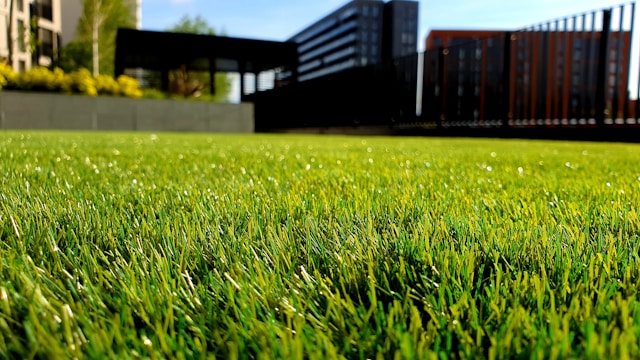
In today’s world, where sustainability is more important than ever, homeowners are adopting eco-friendly lawn care practices. These practices help conserve resources and create a safe environment for local wildlife while maintaining a beautiful and healthy lawn. Switching to sustainable lawn care can be as easy as selecting the suitable grass for your region, educating yourself about organic fertilizers, and using water wisely.
Understanding the Benefits of Sustainable Lawn Care
A typical suburban lawn’s neatly trimmed green grass may not naturally represent the surrounding ecosystem. However, adopting sustainable practices can help homeowners significantly reduce emissions, minimize the use of chemical fertilizers, and conserve water. Professional lawn care services Arlington, VA offer earth-friendly methods that enhance local ecosystems while maintaining the aesthetic value of outdoor spaces. This ecological approach supports natural cycles and enhances diversity within the yard, making it a welcoming habitat for birds, insects, and other wildlife. Maintaining a sustainable yard creates an enjoyable space for yourself and is crucial to the local biodiversity network.
Choosing the Right Grass for Your Climate
Grass selection is foundational to lawn care sustainability. While some grass varieties can be thirsty and require excessive maintenance, others can thrive with minimal intervention. Grasses native to your region or climate-adapted are inherently more sustainable as they are accustomed to local precipitation patterns and temperatures. This makes them more drought-resistant and less dependent on chemical aids to sustain their health and vitality.
Organic Fertilization: Towards a Healthier Ecosystem
Instead of reaching for chemicals to nurture your lawn, consider organic options. These natural fertilizers are derived from plant, animal, or mineral sources and break down into the soil to improve quality. Organic matter like composted food scraps or grass clippings can provide a steady stream of nutrients as it decomposes, which helps to build a richer, more robust soil ecosystem that supports healthy lawn growth.
Water-Wise Strategies for the Eco-Conscious Gardener
Sustainable lawn care also hinges on responsible water usage. Overwatering is not just wasteful; it can lead to shallow root systems and weakened turf, which are susceptible to pests and diseases. Techniques such as rainwater harvesting, using rain sensors with irrigation systems, and watering during more excellent parts of the day when evaporation rates are lower can significantly improve water use efficiency in your lawn care routine.
Integrated Pest Management (IPM): A Cornerstone of Ecological Lawn Care
IPM is a nuanced approach to pest control that prioritizes environmentally sound and socially acceptable methods over blanket chemical use. It encourages regular monitoring of the lawn for signs of pests and taking action only when necessary. Non-toxic treatments, beneficial insects, and mechanical traps can all be part of an IPM strategy that promotes lawn health and respects the surrounding ecosystem.
Composting and Mulching: The Cycle of Nutrients
Composting and including mulch in your gardening practices can transform waste into a valuable resource. Composting kitchen and yard scraps creates nutrient-rich humus that revitalizes depleted soils. Meanwhile, mulch acts as a dual-purpose agent, supplying nutrients as it breaks down and forming a moisture-retaining protective layer for the soil.
Leveraging Technology in Eco-Friendly Lawn Maintenance
Using technology to maintain lawns has proven to be a boon for eco-friendly practices. Electric and battery-operated tools, for instance, reduce carbon emissions and can be more efficient, delivering better results with less environmental impact. High-tech irrigation systems can be programmed to respond to real-time weather conditions, only watering when the lawn truly needs it. Moreover, apps and online resources can be invaluable for homeowners, providing insights and reminders for eco-friendly lawn care practices.

